Re:building
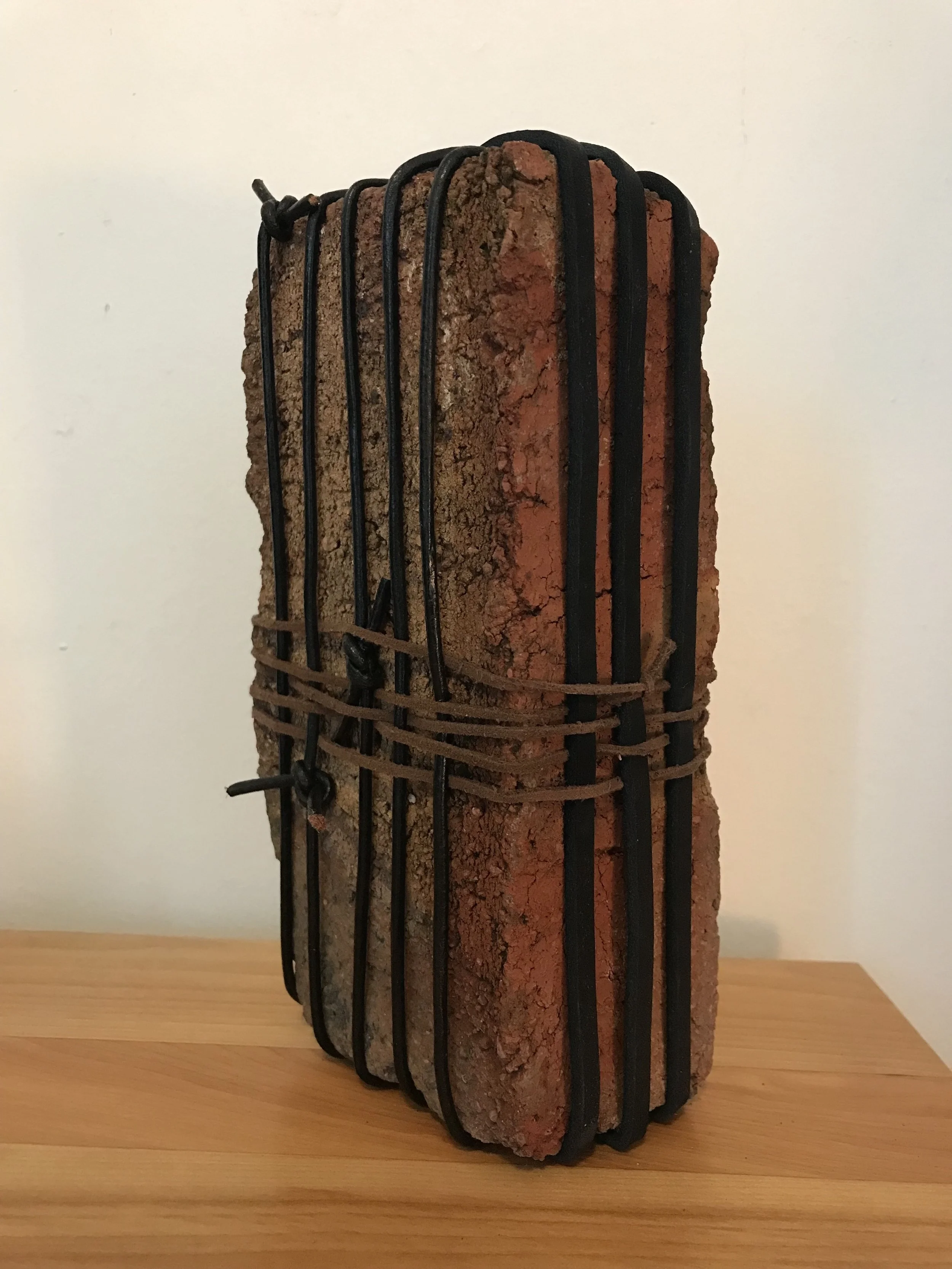
The neighbourhood of Saint-Henri in southwest Montréal began as a rural tannery district in the late 17th century. By the early 20th century, the neighbourhood had transformed into the largest industrial area in the country, taking advantage of the railroad and the Lachine Canal, which provided fresh water, transportation, and power to the red brick factories that lined its banks.[1] Working-class families populated the area and worked within these factories, which ranged from ironworks, oil refineries, and slaughterhouses to flour mills, cotton mills, and sewing machine factories. The area holds an important place in the city’s labour history, with over 30 strikes recorded between 1871 and 1903 alone.[2]
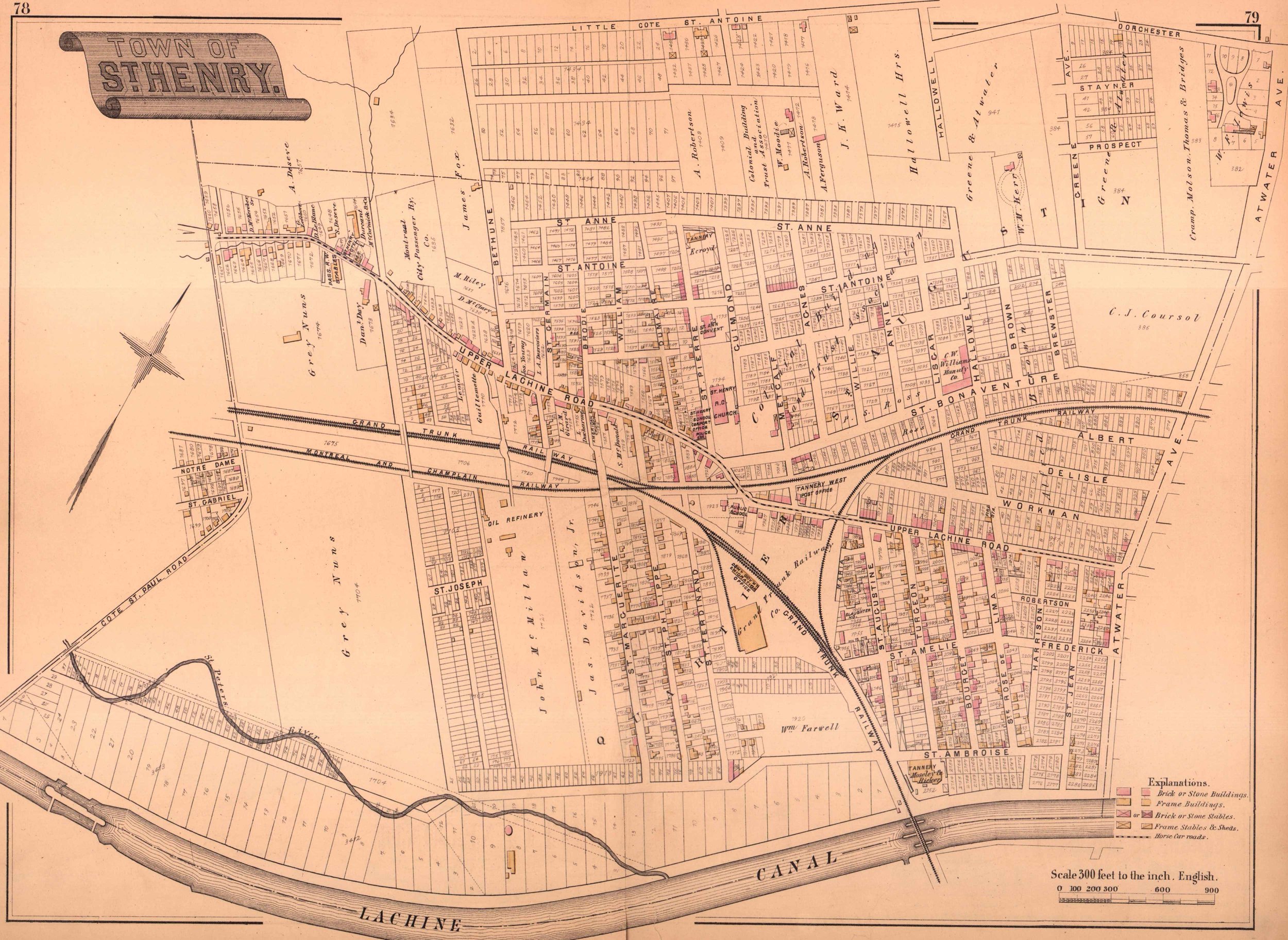
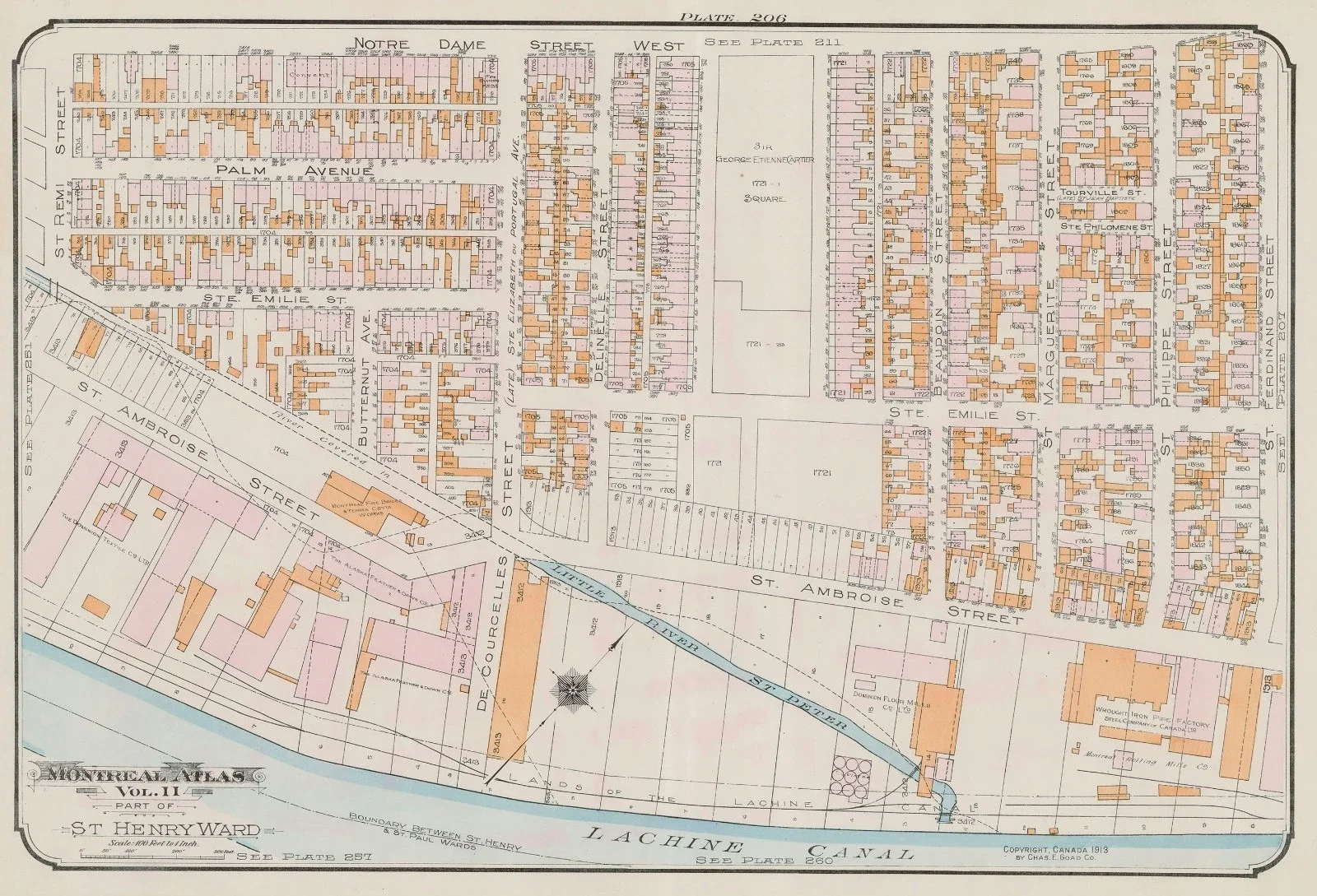
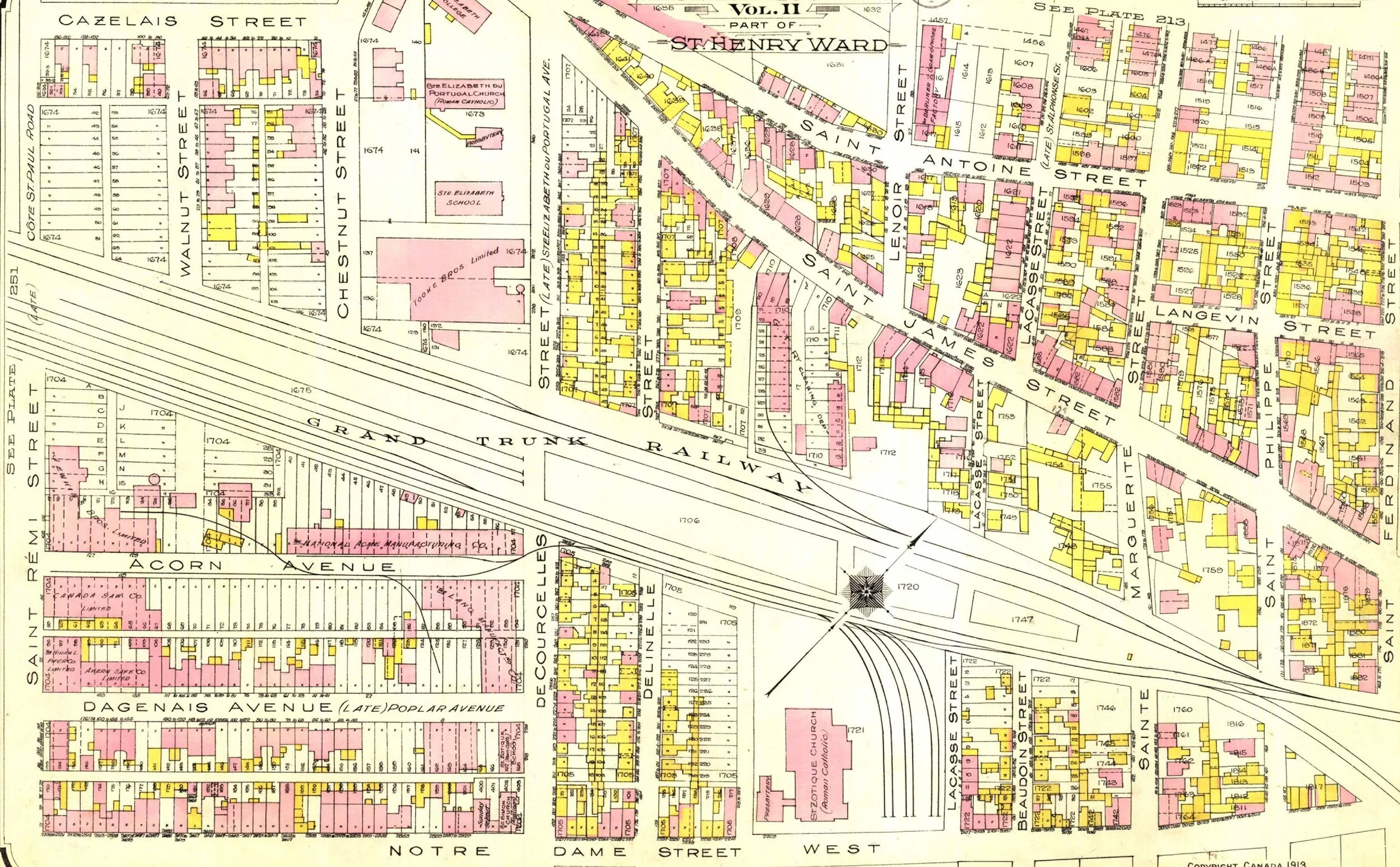
Since the 1990s, many of the remaining factory buildings have been purchased by developers and transformed into luxury condos, tech offices, and events spaces—far removed from their original purposes and the people who once spent their days labouring within them. This redevelopment process has dramatically changed the demographic makeup of the neighbourhood, and in doing so, it has recontextualized the materials that make up Saint-Henri’s physical environment; even brand new buildings constructed in the area imitate the red brick facades of the former industrial buildings.
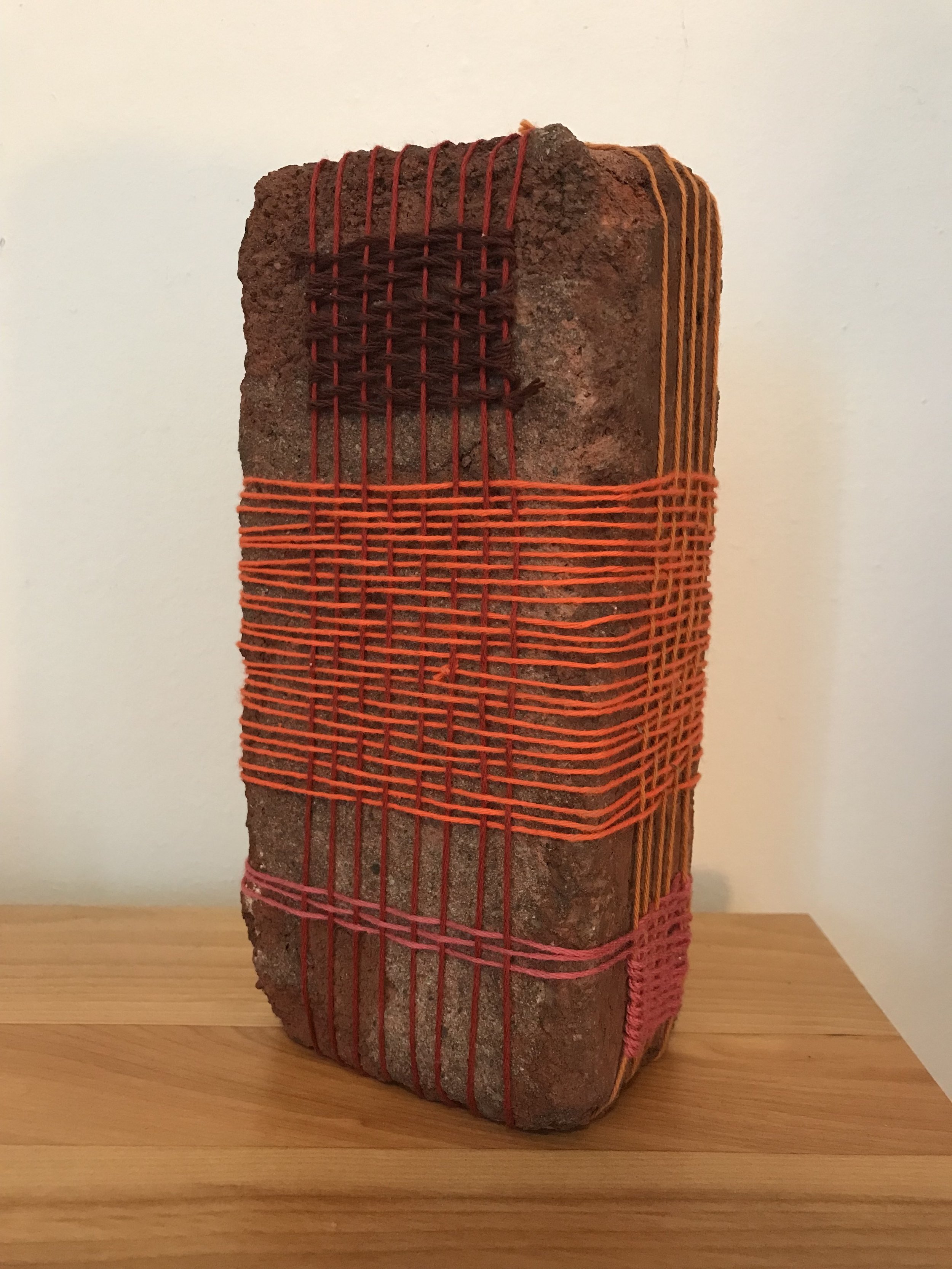
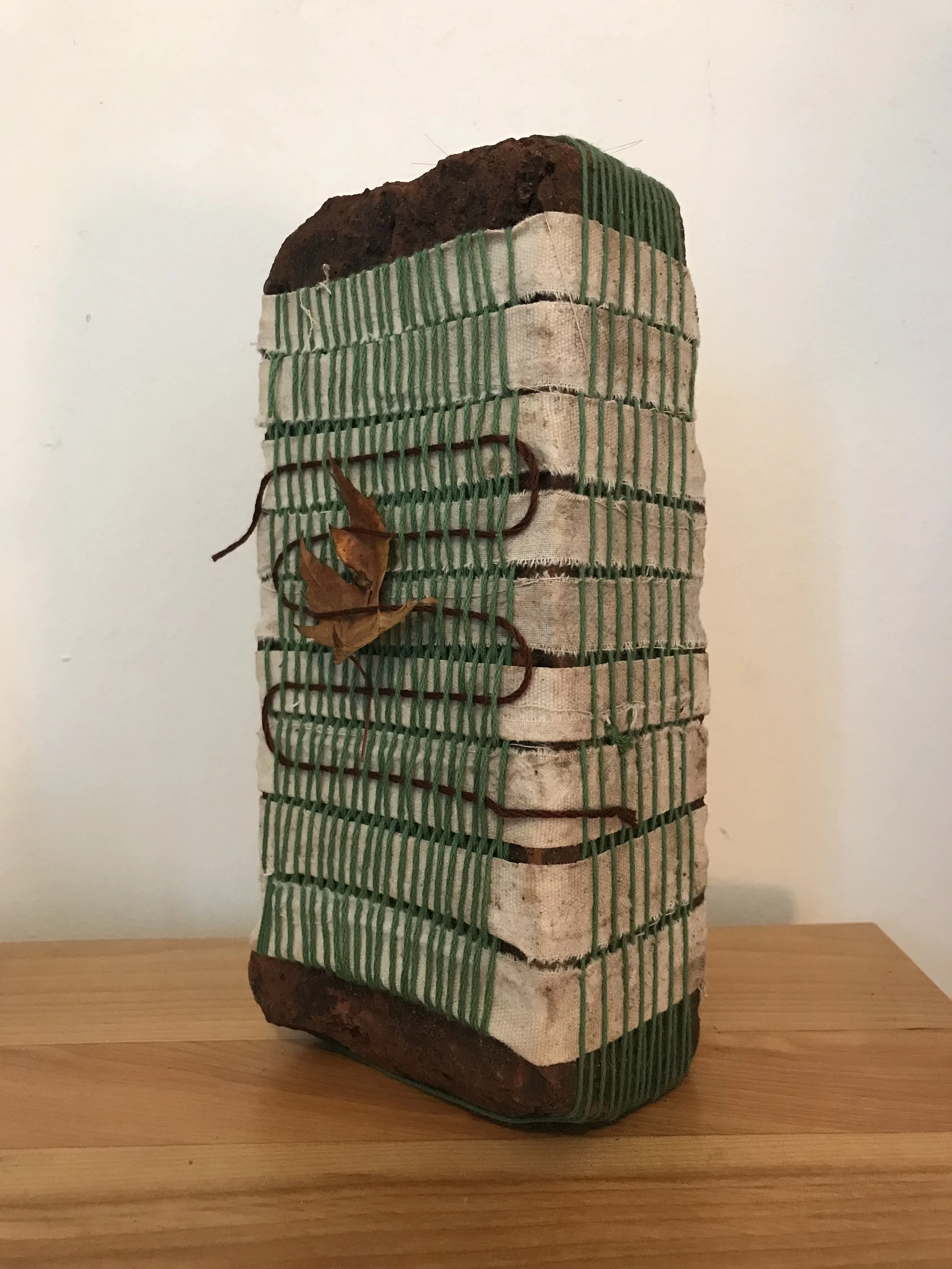
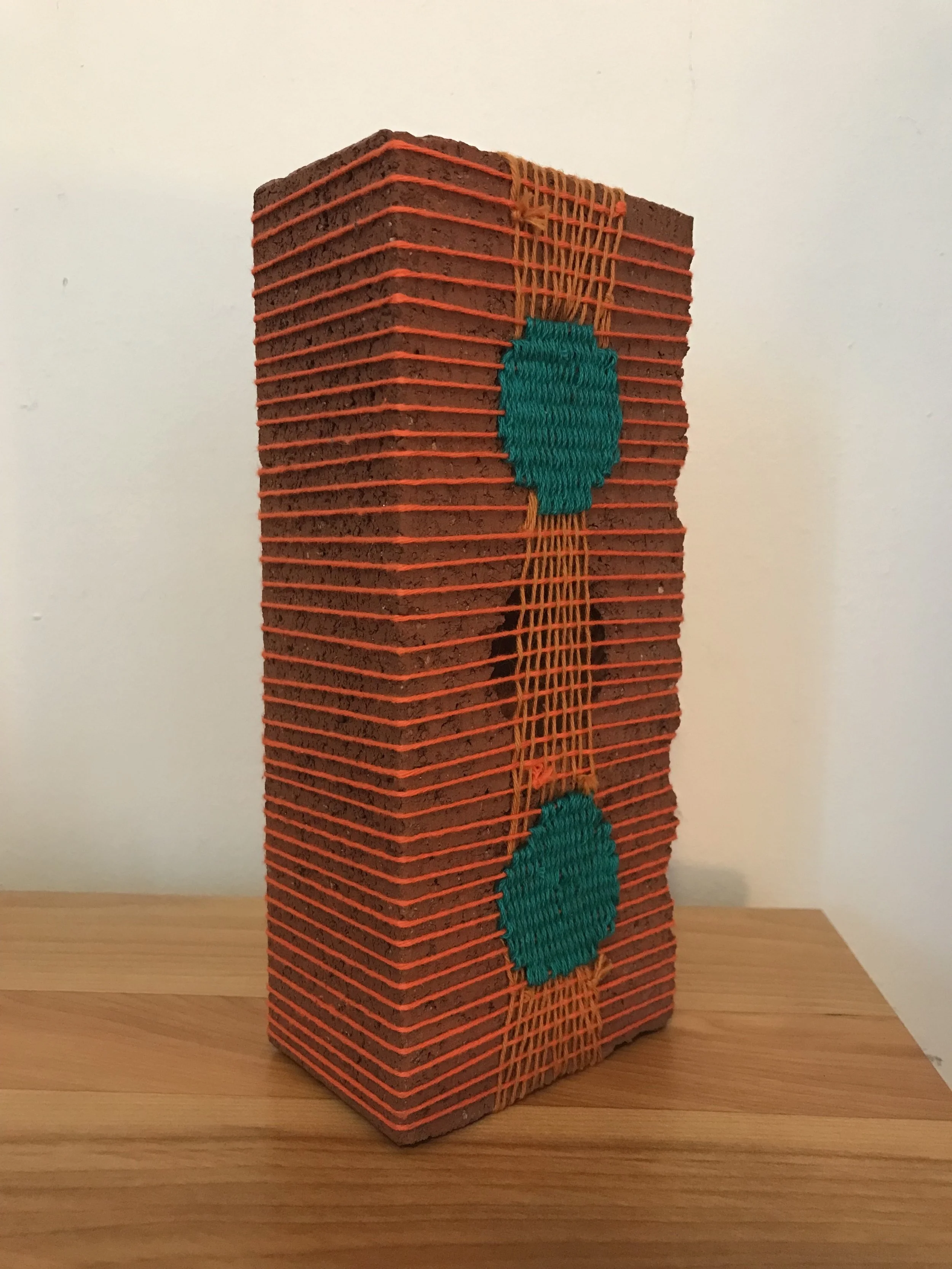
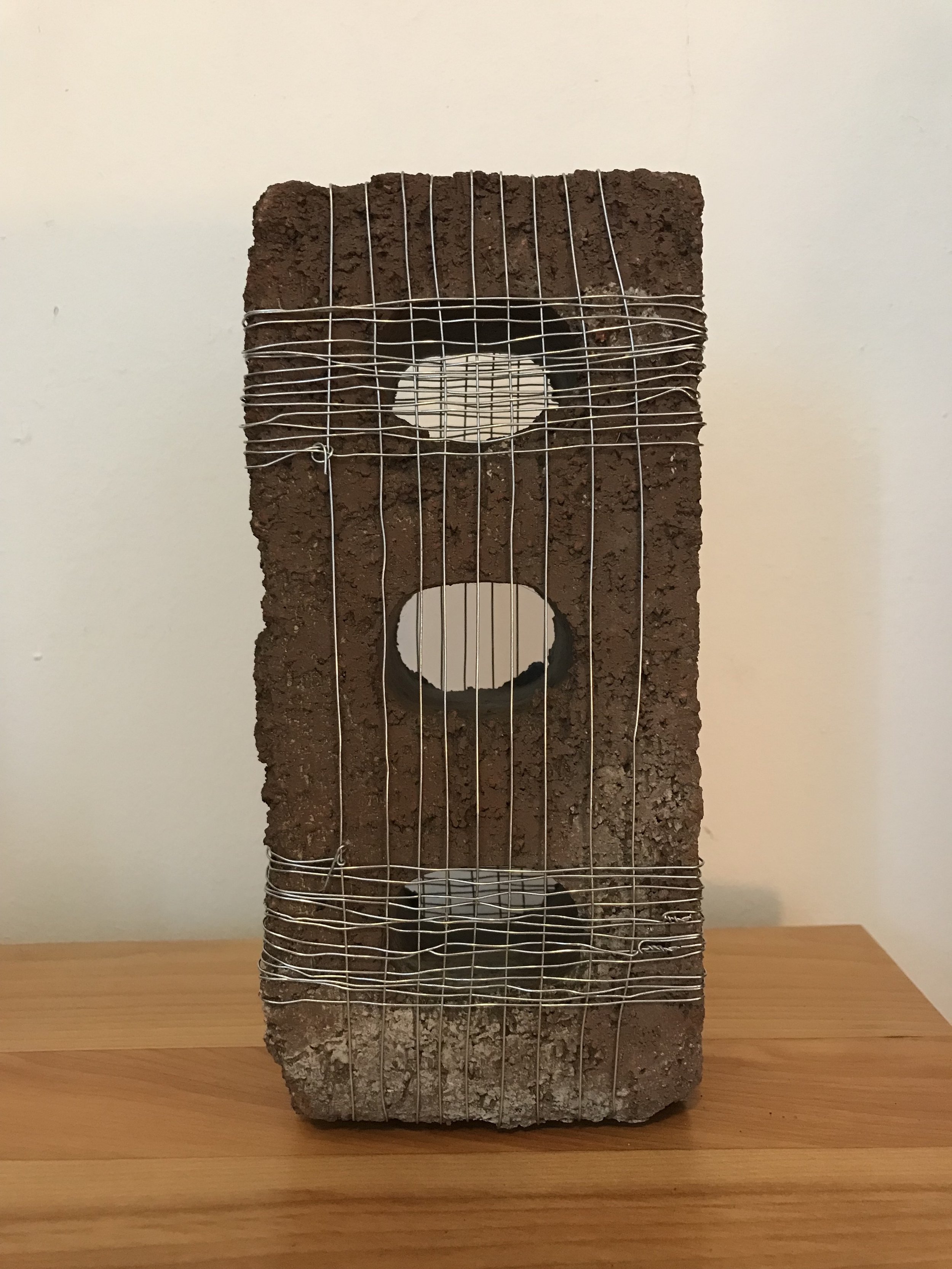
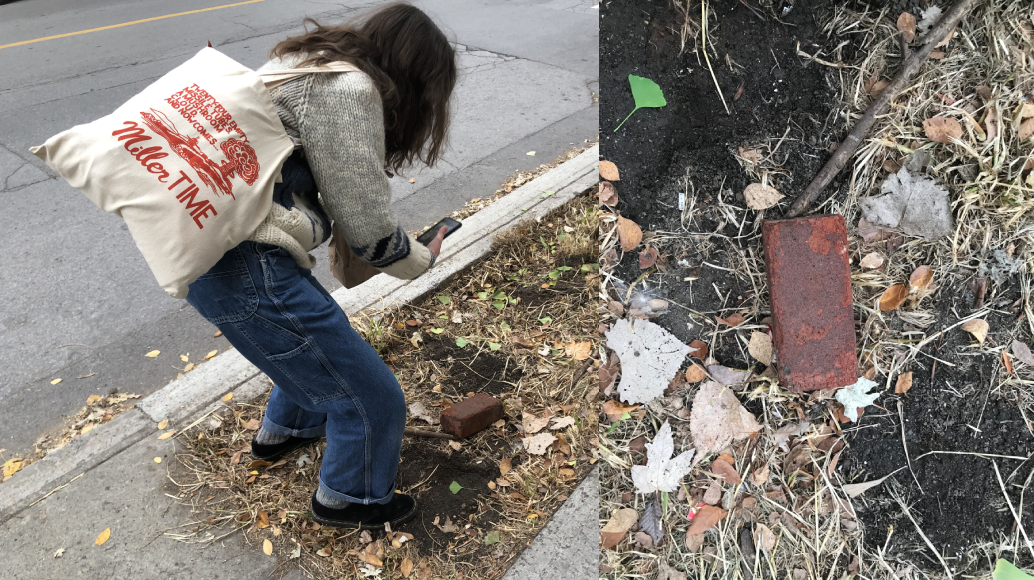
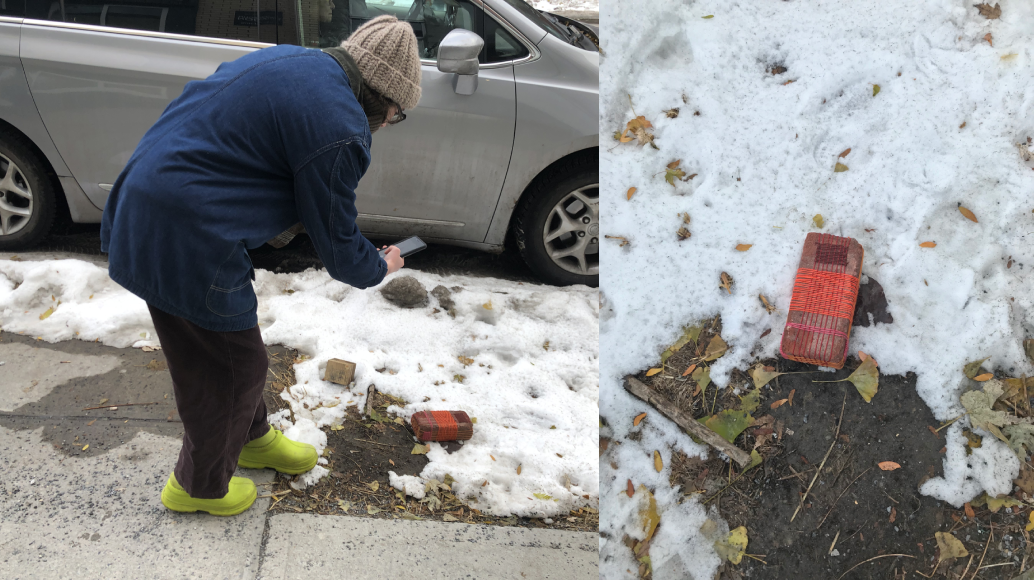
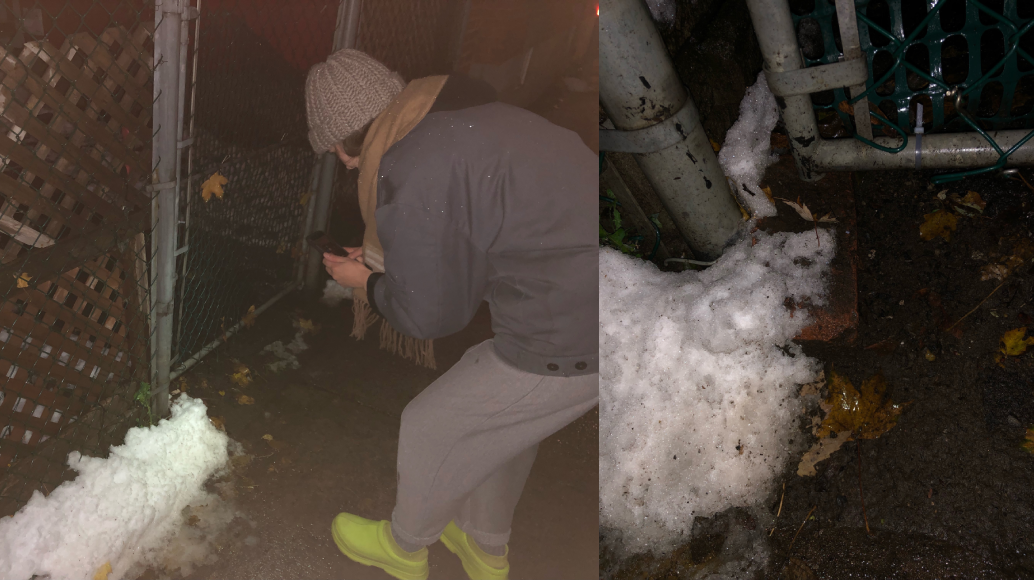
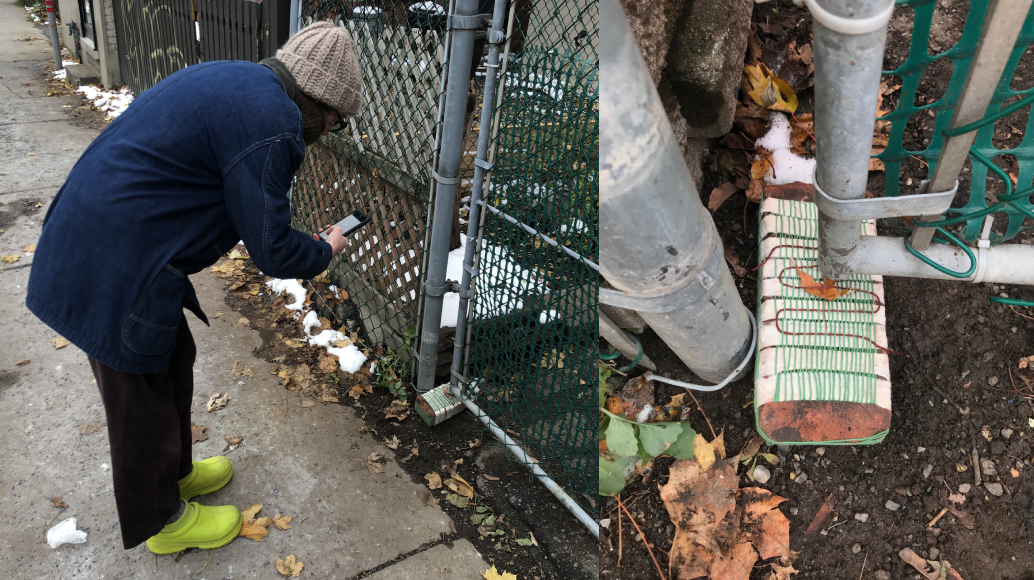
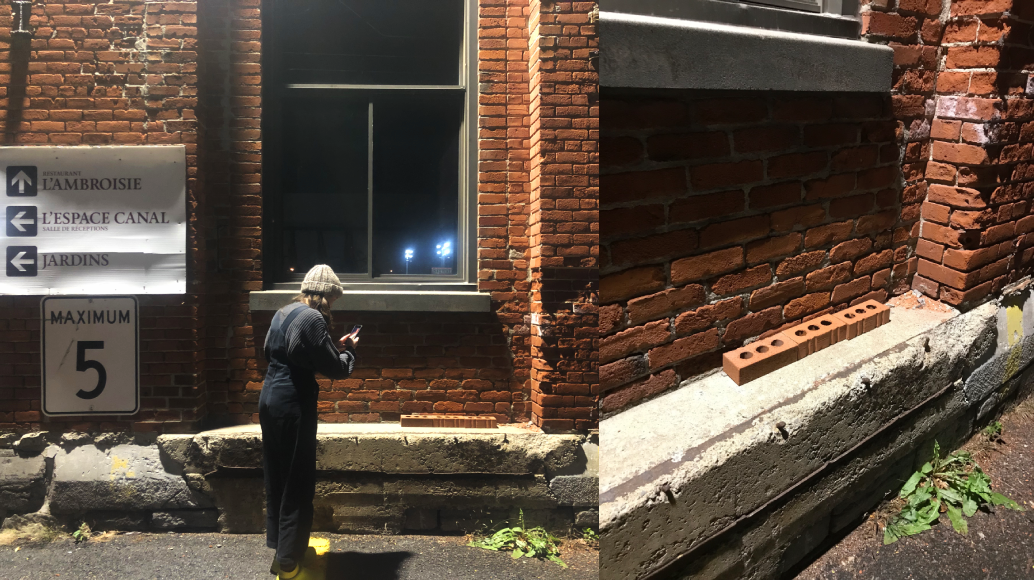
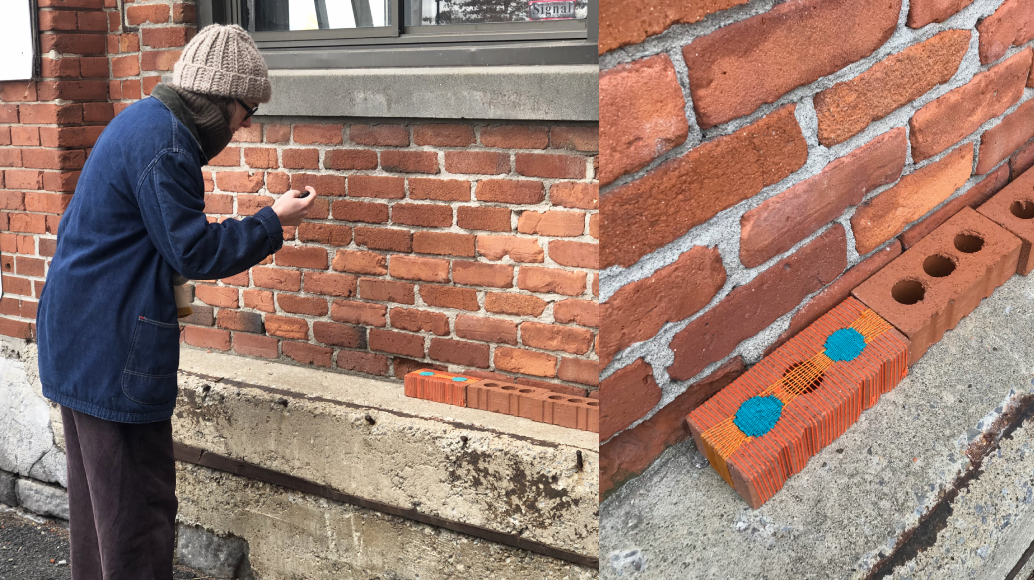
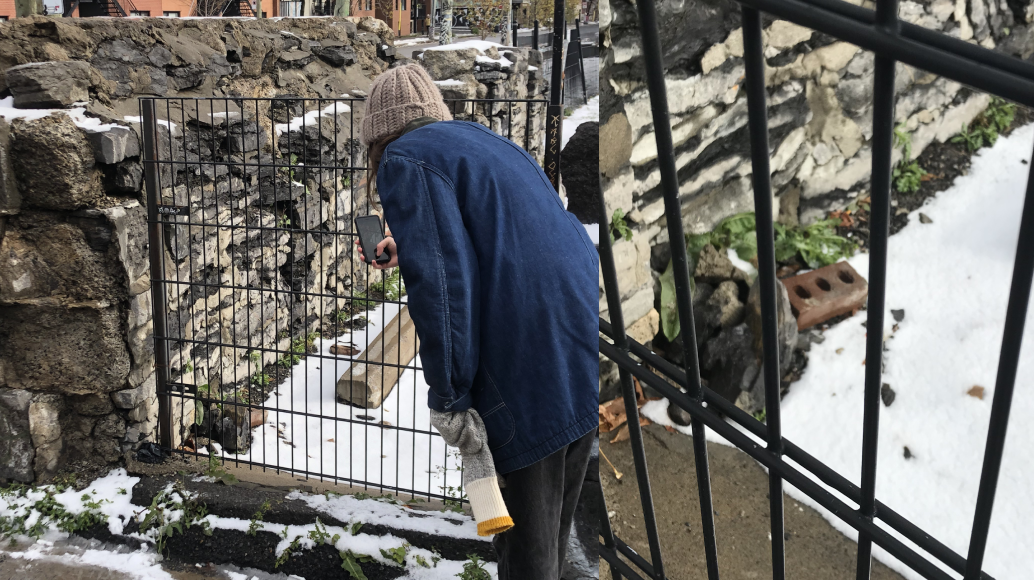
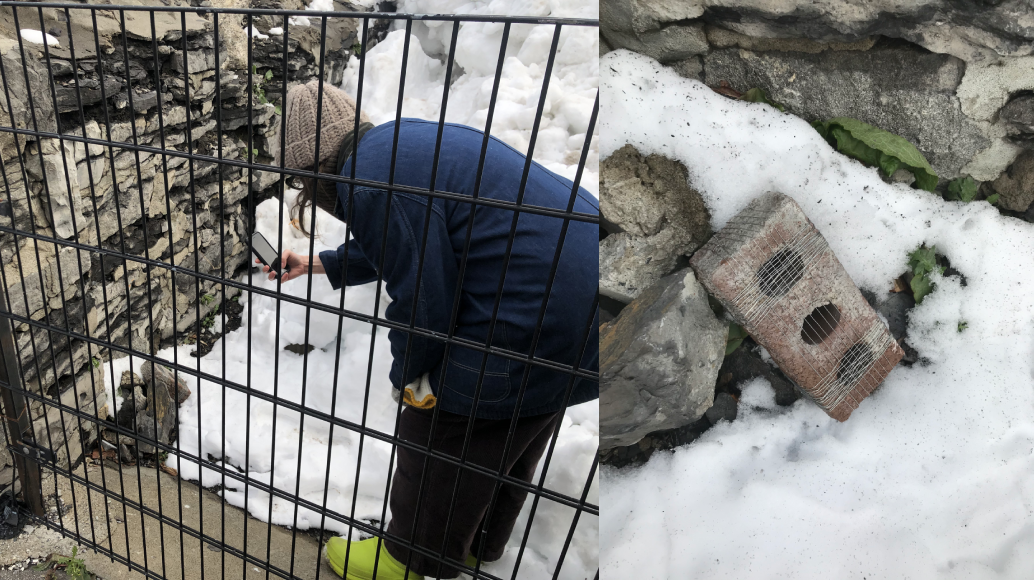
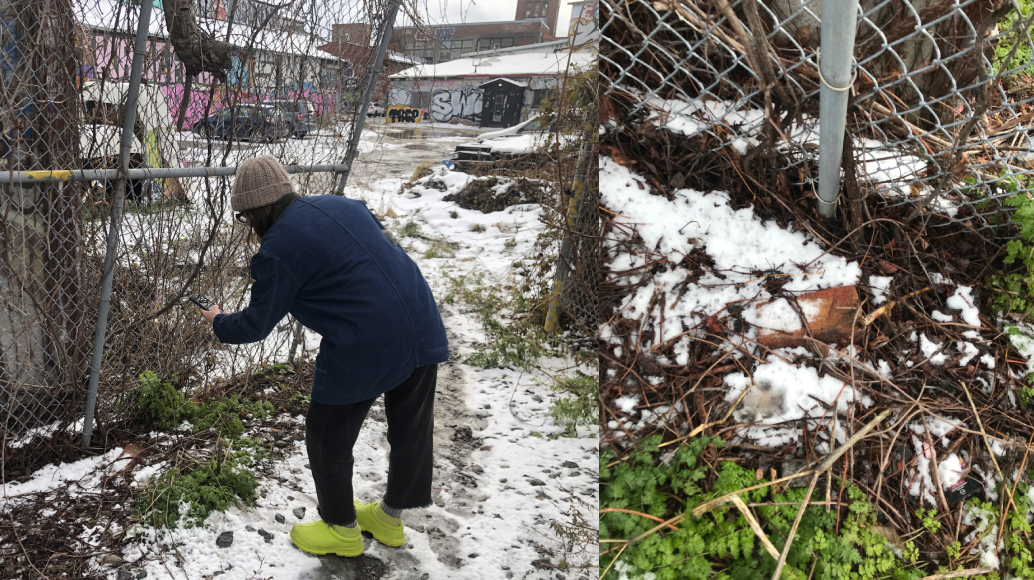
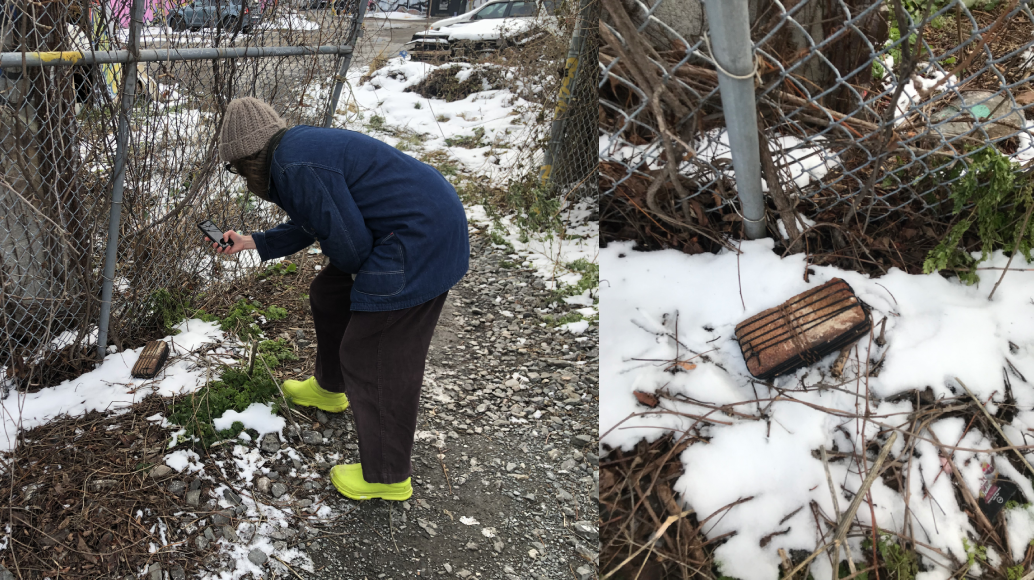
Re:building is an ongoing project that calls attention to both the shifting socioeconomic makeup of the neighbourhood and the physical materials that constitute it. In much the same way that Saint-Henri artist Douglas Scholes’ beeswax casts of garbage function as “monuments to the transformed state” of his performance sites, this piece physically marks Saint-Henri’s transformation through a series of small interventions.[3] By taking bricks I find within the boundaries of Saint-Henri, weaving onto them using the same textile materials that were once produced in some of the neighbourhood’s factories, and returning them exactly where I found them, I perform an act of care that draws attention to discarded and often-ignored elements of the built environment. The piece attempts to give the bricks a new purpose and symbolically rebuild Saint-Henri into a neighbourhood that reflects and respects its working class history.
Bibliography
1 Saint-Henri Revitalization & Integration Strategy (2008): 4, https://www.concordia.ca/content/dam/artsci/geography-planning-environment/docs/student-projects/Saint-Henri%20Revitalization%20%26%20Integration%20Strategy%20Brief.pdf.
2 “Histoire de Saint-Henri,” Société historique de Saint-Henri, https://www.saint-henri.com/histoire/.
3 “Acts applied mostly for good practical reasons (aamfgpr),” Douglas Scholes, https://dougscholes.ca/acts-applied-mostly-for-good-practical-reasons-aamfgpr/.